Tong Ren Sessions

Gentle, focused energetic support

Tong Ren is a non-invasive, model-based energetic practice that works through focused attention and intention rather than physical contact. The approach is grounded in principles drawn from Chinese medicine, neurobiology, and systems thinking — particularly the idea that the body functions as an interconnected network capable of self-regulation.

Rather than attempting to force change, Tong Ren creates conditions that support coherence, circulation, and nervous system settling.

What Tong Ren is

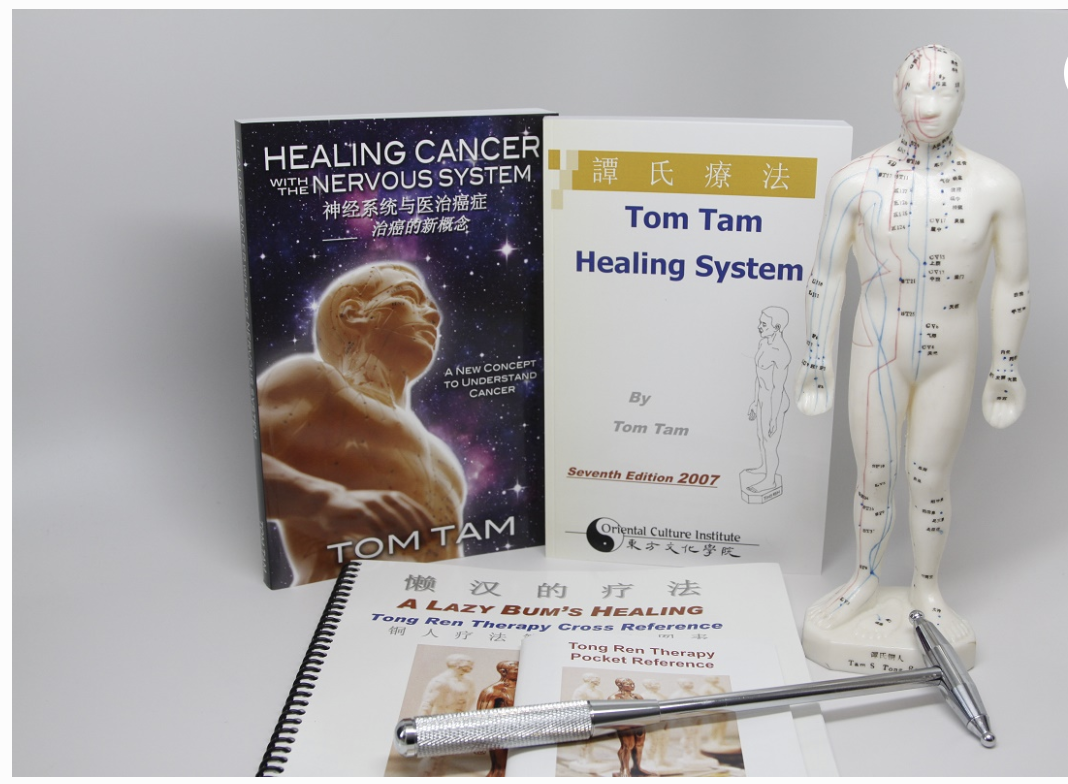
Tong Ren uses a physical model of the human body as a reference system. Focused intention is applied to specific points on the model, corresponding to areas of the body and energetic pathways.

From a modern biological and systems-based perspective, Tong Ren can be understood as working through several overlapping mechanisms:

  • Nervous system regulation: sustained, focused attention supports parasympathetic activation and down‑regulation of stress responses

  • Neural pattern interruption: bringing awareness to specific body regions may help interrupt habituated signaling patterns

  • Fascial and connective‑tissue coherence: fascia functions as a continuous sensory network; changes in tone and perception can influence whole‑body organization

  • Circulatory and fluid dynamics: relaxation and reduced sympathetic load may support blood and lymphatic movement

Rather than forcing change, Tong Ren creates conditions that support coordination and communication across systems.

Sessions are available in person or remotely. Because the work is based on focused attention rather than physical manipulation, location does not change the nature of the session.

What a session is like

Sessions are calm, quiet, and typically last between 30–45 minutes.

You may be seated or resting comfortably while focused intention is applied through the model. Many people report a sense of deep relaxation, warmth, or subtle internal shifting. Others notice changes later, as the nervous system and body integrate the session.

This work is often described as supportive to regulation rather than stimulating or forceful.

To participate in many free sessions a week visit: https://tongrenstation.com/

Who this work tends to support

Tong Ren often resonates with people who:

  • Prefer gentle, non-invasive approaches

  • Are interested in nervous system regulation and whole-body coherence

  • Have explored or are curious about energy-based or mind–body practices

  • Value approaches that respect the body’s innate adaptive capacity

No prior experience with energy work is necessary.

Frequently asked questions

Is Tong Ren medical treatment?
No. Tong Ren is not medical care, diagnosis, or therapy. It does not replace licensed medical treatment and is not intended to treat disease.

How can something non‑physical have an effect?
Research in neuroscience and psychophysiology shows that focused attention, perception, and nervous system state influence circulation, muscle tone, pain processing, and immune signaling. Tong Ren works within this understanding of mind–body interaction and regulation.

What’s the difference between in‑person and remote sessions?
The experience is similar. Because Tong Ren does not rely on physical touch, both formats work through attention, regulation, and systemic response rather than location.

Do I need to believe in it for it to work?
No belief is required. Most people are simply asked to rest comfortably and notice their experience.

Tong Ren sessions are shared within a private association and offered by contribution. This work is not presented as medical treatment, diagnosis, or therapy, and it does not replace licensed medical care.

Participation is voluntary and based on informed choice.

Next steps

If you’re curious and would like more information, you’re welcome to reach out for a private conversation. I’m happy to explain the process further and answer questions. Or go to Request a Session tab.

Contact: jgosh@privacyabroad.com or 512-517-3682

Here is a wonderfully insightful article written by Johanna Farrimond, a Tong Ren practitioner, on chronic pain and your nervous system :

Why Chronic Pain Keeps Coming Back After Massage and Treatment

The massage works for 18 hours. Then you’re right back where you started. Here’s what’s actually happening—and why the problem isn’t where you think it is.

Dec 16, 2025

You get the massage. The knot releases. For about 18 hours, you feel like a functional human being.

Then it’s back. Same spot. Same tension. Same pain you’ve been chasing for years—maybe a decade or more.

You’ve named this knot. You know its exact location. Your massage therapist knows it. Your chiropractor knows it. You’ve thrown everything at it: deep tissue work, trigger point injections, dry needling, heat, ice, stretching protocols you found on TikTok at 2 AM.

And it keeps coming back.

Here’s what nobody tells you about chronic pain that won’t resolve: the problem isn’t at the site of the pain. It’s upstream. And until you address the upstream blockage, you’re just releasing the same stuck pattern over and over again.

Why Massage Relief Only Lasts 18 Hours

That 18-hour relief pattern you’ve noticed? It’s not random. It’s telling you something important about how your nervous system works.

When you get manual therapy—massage, chiropractic adjustment, whatever releases the immediate tension—you’re temporarily disrupting the electrical signal that’s creating the contraction. The muscle relaxes. Blood flows. For a while, everything feels better.

But here’s the problem: you haven’t changed the signal itself. And your nervous system has learned this pain pattern at multiple levels—motor cortex, brainstem, and spinal cord—encoding it as a form of motor memory.

How Your Brain Creates Chronic Pain Memory

This isn’t metaphor. Research using transcranial magnetic stimulation reveals that as muscle pain develops and persists, your primary motor cortex physically reorganizes. Studies tracking the transition to sustained muscle pain found these adaptations appear within days and correlate directly with increased pain and disability. More reorganization means more pain—this is maladaptive plasticity, neuroplastic changes that perpetuate the problem rather than resolve it.

Your motor cortex doesn’t just respond to pain. It appears to maintain it. Chronic pain patients show decreased motor cortex excitability, altered motor unit recruitment strategies, and impaired motor learning capacities. Gray matter volume actually decreases in the motor cortex, prefrontal cortex, and anterior cingulate cortex in proportion to pain duration and intensity. Your brain’s motor planning areas have physically changed.

Deeper in your nervous system, central pattern generators in your brainstem and spinal cord store rhythmic motor patterns—walking, breathing, and crucially, protective muscle bracing. These neuronal networks produce motor outputs even without conscious input from higher brain centers. When pain persists, these circuits encode protective muscle tension as automatic, subconscious programs that run independently of your awareness.

That shoulder brace isn’t something you’re actively doing. It’s a program your nervous system runs automatically, like breathing or your heartbeat.

At the spinal cord level, persistent pain input triggers long-term potentiation in your dorsal horn neurons—the same cellular mechanism underlying learning and memory. Your spinal cord literally “learns” to amplify pain signals, lowering activation thresholds, expanding receptive fields, and generating spontaneous activity independent of any input from the original injury site.

The comparison to learning to type or ride a bike is exact: these patterns involve the same neuroplastic mechanisms. Repeated activation strengthens synaptic connections, shifting control from conscious cortical areas to automatic subcortical and brainstem circuits. Just as you don’t consciously think about finger placement when typing, your nervous system doesn’t consciously maintain your shoulder tension. It runs automatically from learned neural programs.

So you release the muscle. And 18 hours later, your nervous system regenerates the same electrical signal from the same learned pattern, and the muscle re-braces. Because the pattern—the upstream code—is still running.

This is why chronic pain is so maddening. You’re not imagining it. You’re not weak. You’re not failing to stretch enough or foam roll correctly. The problem is that every intervention you’ve tried addresses the output (the tight muscle) without addressing the input (the neural pattern creating it).

The C1-C2 Vertebrae Connection to Chronic Neck and Shoulder Pain

For many people with chronic neck, shoulder, and upper back pain—especially pain that travels with brain fog, fatigue, or cognitive symptoms—there’s a specific upstream location worth understanding: the junction between your skull and your first two cervical vertebrae.

C1 (the atlas) and C2 (the axis) are unique in your spine. They’re the only vertebrae that allow your head to rotate and nod. They’re also the gateway between your brain and the rest of your nervous system. Every bioelectrical signal from your brain to your body passes through this junction.

When C1 and C2 are misaligned, compressed, or unstable, the effects cascade downstream in ways that seem unrelated but share a common root.

The vagus nerve—which carries 80% of your parasympathetic nervous system signals—runs directly adjacent to these vertebrae. When it’s compressed or stretched by C1-C2 dysfunction, your nervous system loses the ability to downshift from high alert into rest mode. You stay stuck in sympathetic activation. Your muscles stay braced. Your pain persists.

The vertebral arteries that supply blood to your brain also pass through this area. Compression here reduces cerebral blood flow, particularly to regions responsible for attention, memory, and executive function. This is why chronic pain and brain fog so often travel together—they share an upstream cause.

The superior cervical sympathetic ganglion sits near C2, controlling your fight-or-flight response. When this area is compromised, your nervous system defaults to hypervigilance. Chronic muscle tension is a downstream effect of a system that cannot feel safe enough to release.

Why Massage, Chiropractic, and Physical Therapy Don’t Fix Chronic Pain

Understanding the upstream problem explains why downstream interventions keep failing.

Massage temporarily disrupts the muscle contraction. But it doesn’t reprogram the neural pattern generating that contraction. Your motor cortex, brainstem, and spinal cord have learned this as a default. Within hours, they regenerate the signal.

Chiropractic adjustment might temporarily improve C1-C2 alignment. But if the soft tissue around those vertebrae remains in a chronic state of tension—because the nervous system is still dysregulated—the vertebrae drift back out of alignment.

Pain medication dampens your perception of the signal. It doesn’t change the signal itself.

Physical therapy strengthens muscles around the dysfunction. But if the bioelectrical pattern creating the dysfunction is still running, you’re strengthening compensatory patterns rather than resolving the root issue.

Each of these approaches treats one node in a system problem. And chronic pain is, fundamentally, a system problem—an electrical circuit stuck in a pattern that keeps regenerating itself.

Central Sensitization: Why Your Nervous System Amplifies Pain

Here’s where it gets more complex—and also more hopeful.

When pain persists long enough, your nervous system undergoes neuroplastic changes. Your spinal cord and brain literally rewire to amplify pain signals. This is called central sensitization, and it explains a lot about why chronic pain behaves so strangely.

With central sensitization, your pain-processing neurons become hyperexcitable. They fire more easily and more intensely. Your threshold for pain drops—stimuli that shouldn’t hurt now hurt. The pain spreads beyond the original injury site. You develop sensitivity to touch, temperature, and pressure that used to feel neutral.

This isn’t psychological. It’s measurable. Functional neuroimaging shows gray matter changes in chronic pain patients—structural reorganization in the insula, anterior cingulate cortex, prefrontal cortex, and thalamus. Your brain’s pain matrix has physically altered to sustain the pain pattern.

But here’s the hopeful part: neuroplasticity works both ways. The same mechanisms that created central sensitization can, theoretically, reverse it. The brain that learned pain can unlearn it—if you address the bioelectrical patterns at their source.

The Bioelectrical Root Cause of Chronic Pain

This is where the framework I use—based on the Tom Tam Healing System—offers something conventional approaches often miss.

In this system, chronic pain isn’t primarily a tissue problem or even a psychological problem. It’s a signal problem. Bioelectrical blockages at specific points along your spine prevent normal nerve conduction, creating downstream dysfunction that manifests as pain, tension, and the cognitive symptoms that often accompany them.

For chronic neck and shoulder pain with cognitive involvement, the relevant blockages are typically in the upper cervical spine and cranium.

C1 is the master flow point. When blocked, bioelectrical signals from your brain to your body can’t conduct efficiently. Everything downstream suffers. Opening C1 is often the first step in any protocol—not because the pain is located there, but because signal flow depends on it.

C2, C3, and C4 regulate blood flow to your brain and head. Blockages here contribute to both pain and the cognitive symptoms—brain fog, difficulty concentrating, memory issues—that often accompany chronic neck tension.

GB12, at the base of your skull, is a key point for activating the vagus nerve and promoting the shift from sympathetic (fight-or-flight) to parasympathetic (rest-and-repair) nervous system state. When you can’t access parasympathetic mode, your muscles can’t fully release. The tension pattern persists because your nervous system is signaling danger even when you’re objectively safe.

The Sky Windows—ST11, LI17, LI18, SI16—are points along the neck that affect blood flow through the carotid and vertebral arteries to your brain. Opening these points improves cerebral circulation, addressing the brain fog and cognitive symptoms that often accompany chronic pain.

Chronic Pain, Brain Fog, and Fatigue: One Root Cause

Here’s the insight that might reframe your experience: what feels like multiple problems—the shoulder knot, the brain fog, the fatigue, the inability to fully relax—may actually be one problem expressing through multiple symptoms.

When C1-C2 is compromised, it creates a cascade. Vagus nerve compression leads to autonomic dysfunction. Autonomic dysfunction leads to chronic muscle bracing. Chronic muscle bracing creates trigger points. Trigger points generate their own electrical activity, feeding back into the system and reinforcing the pattern.

Meanwhile, reduced blood flow to the brain creates cognitive symptoms. Impaired parasympathetic function prevents recovery. The whole system stays locked in a dysregulated state that no single downstream intervention can resolve.

This is why you can chase the shoulder knot forever without fixing it. Because the shoulder knot isn’t the problem—it’s the output of an upstream blockage that keeps regenerating the pattern.

How to Break the Chronic Pain Cycle

If chronic pain is a system problem rooted in bioelectrical blockages, the solution needs to address those blockages systematically.

In my practice, that means identifying where the primary blockages are—typically through assessment of symptoms and tender points along the spine—and then working to clear them in sequence. Not just the site of pain, but the upstream points that govern signal flow to that area.

For chronic neck and shoulder pain, a typical protocol includes C1 (brain-spine gateway), C2-C4 (upper cervical blood flow), GB12 (vagus nerve activation), the Sky Windows (cerebral circulation), and often GV20 (raising overall system voltage) and ST36 (grounding and completing the circulation loop).

The goal isn’t to chase the pain. It’s to restore the bioelectrical flow that allows your nervous system to regulate normally. When that flow is restored, the downstream symptoms—including the chronic muscle tension—can resolve because the signal creating them has changed.

What Chronic Pain Relief Actually Feels Like

When we work on clearing upstream blockages, the first thing people often notice isn’t that the pain disappears instantly. It’s that something shifts in how their body feels overall.

Common immediate responses include warmth in the hands and feet (circulation improving), deeper breathing (didn’t realize how shallow it had been), a sense of heaviness or deep relaxation (parasympathetic engagement), and mental clarity (”the fog lifted”).

The pain itself often changes over the following hours and days. It might migrate, decrease, or shift in quality before resolving. This can feel strange if you’re used to thinking of pain as a fixed thing located in one place. But if pain is a pattern your nervous system has learned, unlearning it looks like gradual recalibration, not instant deletion.

Over weeks of consistent work, the pattern weakens. The 18-hour return window extends. The baseline tension decreases. Eventually, many clients find that the chronic pain they’d named and tracked for years simply isn’t there anymore—not because they’re managing it better, but because the upstream blockage creating it has cleared.

How Long Does It Take to Heal Chronic Pain?

I want to be realistic about this: chronic pain that’s been present for years doesn’t typically resolve in a single session.

If your pain has been present for 1-2 years, expect noticeable shifts within a few weeks of consistent work.

If it’s been present for 5+ years, this is longer-term work. Initial relief may come quickly, but full resolution of deeply established patterns can take months.

The key variable is how long the pattern has been encoded. Fresh patterns clear faster. Patterns you’ve been running for a decade have more neural infrastructure holding them in place. They can still resolve—but they need more consistent attention to overwrite the learned response.

Why Your Chronic Pain Isn’t Your Fault

If you’re reading this with that same chronic pain you’ve been fighting for years—the one that responds to treatment temporarily and then comes right back—understand this:

You’re not imagining it. You’re not weak. You haven’t failed to find the right stretch or the right practitioner.

You’ve been treating a system problem with point solutions. The pain keeps returning because the upstream signal keeps regenerating it.

The shoulder knot isn’t the problem. The brain fog isn’t a separate issue. The tension you can’t release isn’t about needing to relax more.

It’s one pattern. One upstream blockage. One set of bioelectrical signals that your nervous system has learned to run on autopilot.

And patterns can be unlearned.

Johanna Farrimond